

Caitlin Welch
Vernal Pool Phenology Project – amphibians, woody plants, and climate change
Abstract:
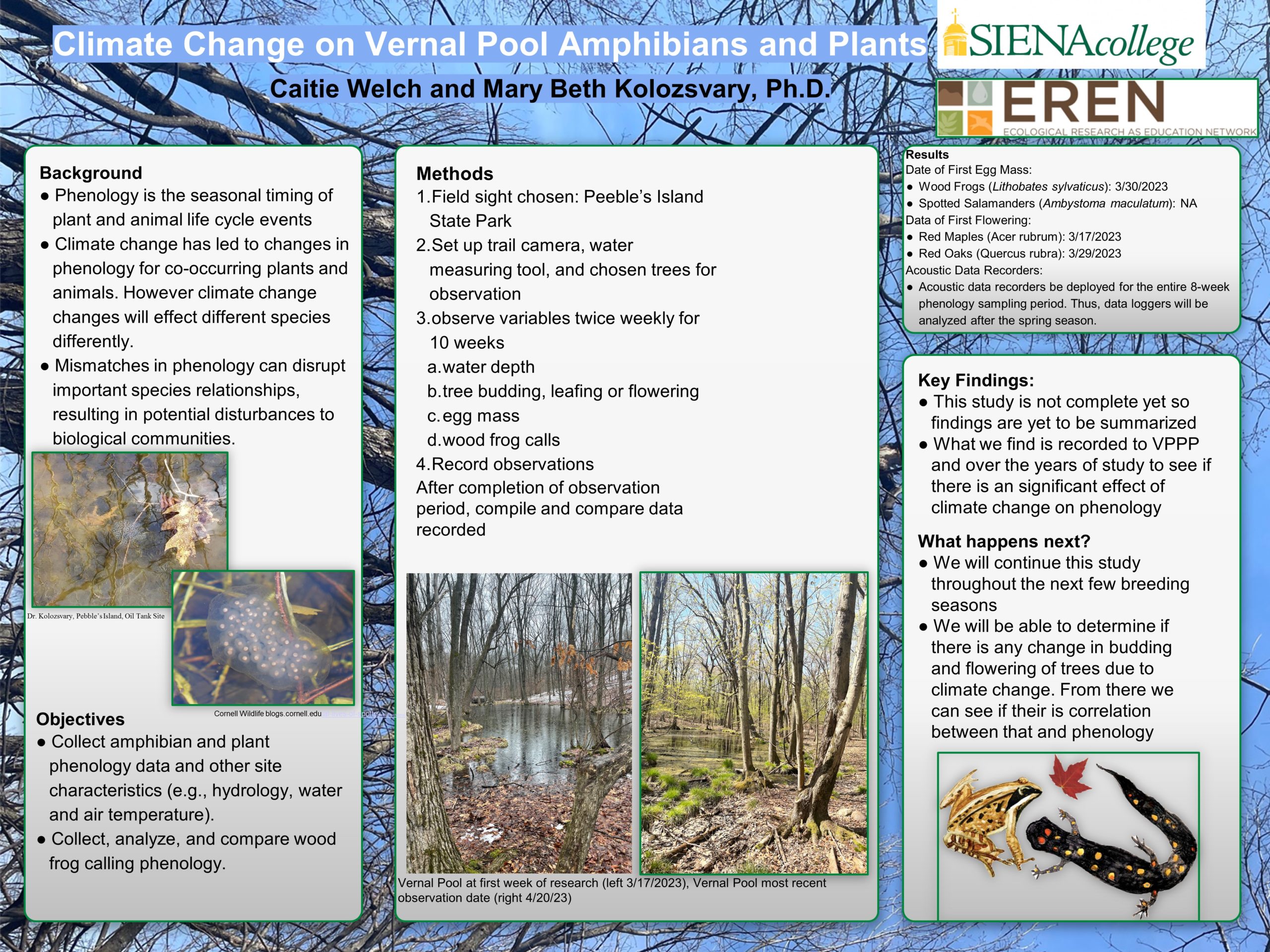
Phenology refers to the seasonal timing of plant and animal life cycle events, such as amphibian breeding, plant flowering. Climate change has led to changes in phenology for co-occurring plants and animals, but these changes do not necessarily happen at the same rate, magnitude, or in the same direction for co-occurring species. Mismatches in phenology can disrupt important species relationships, resulting in potential disturbances to biological communities. An example is the potential mismatch in early-spring phenology of pond-breeding amphibians, such as wood frogs and spotted salamanders, and the woody plants surrounding their breeding pools. The geographic and landscape drivers of phenology–particularly with respect to pond-breeding amphibians and woody plants surrounding forest ponds–is not well understood. Moreover, spatial asynchrony in phenology is expected to manifest within a single species, and this multi-site collaborative project will monitor phenology of amphibians and trees at small, forested ponds across time to identify potential shifts and emerging asynchronies in the timing of important life history events. During this study I gathered phenology and water level data, monitor amphibian movement, calls and breeding as well as analyzing collected data for onset and peak calling of wood frogs.
Title
Vernal Pool Phenology Project – amphibians, woody plants, and climate change
Faculty Advisor
Dr. Mary Beth Kolozsvary
Course
Independent Study
Presentation Type
Poster
Location
Table 25