

Victoria Vellucci, Ashley Bonomi, Kali Cucharale and Francesca Gillani
Forensic Genetic Genealogy
Abstract:
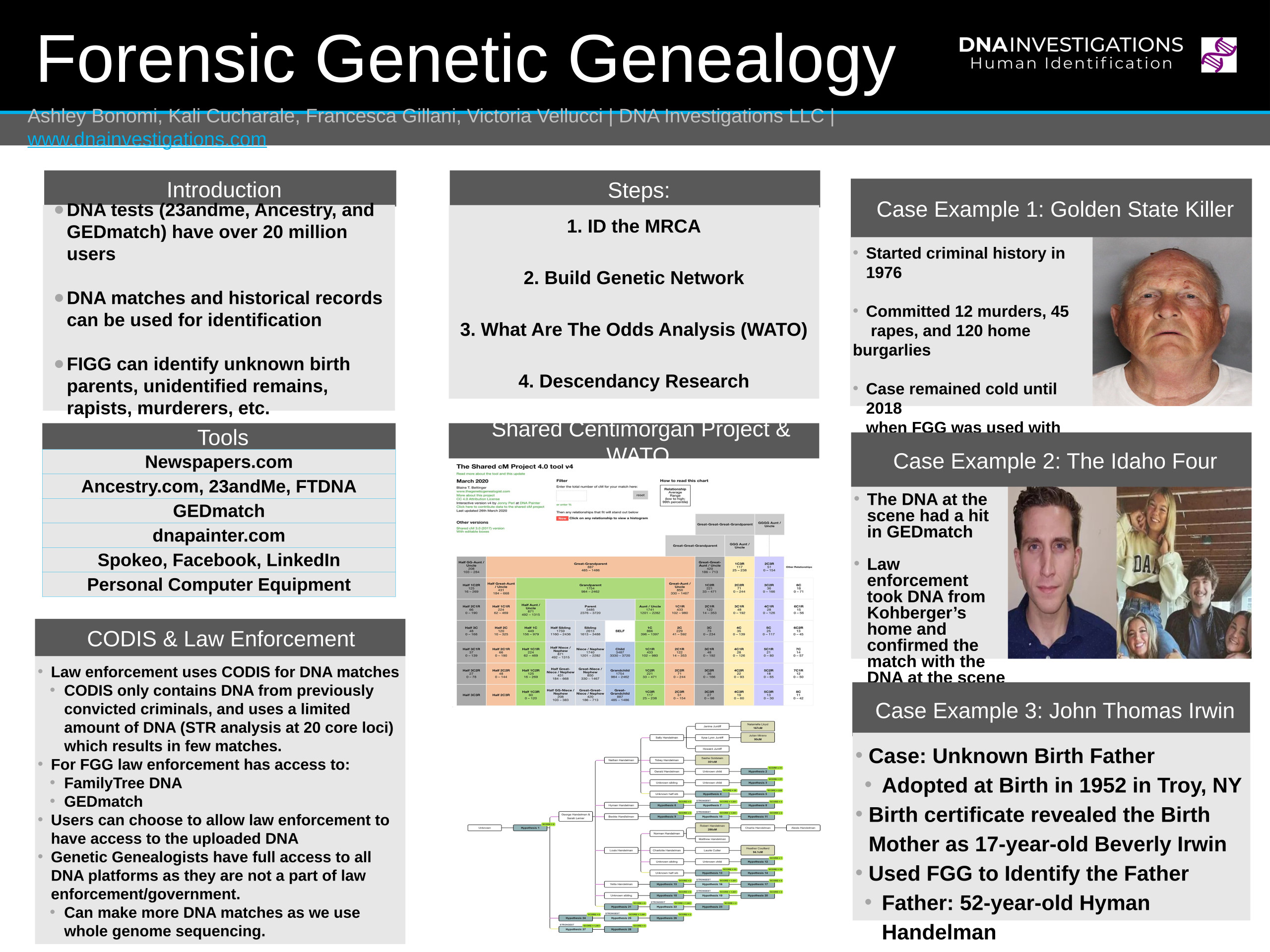
Forensic Genetic Genealogy (FGG) is a new forensic method to determine the identity of unknown individuals using DNA to find familial matches on platforms that use DNA test kits such as Ancestry and 23andme. The online platforms have over 20 million users who share their DNA which is used by forensic genealogists to identify unknown birth parents, unknown remains, rapists, and murders. According to the National Missing and Unidentified Persons System (NamUS) there are over 14,000 unidentified human remains throughout the country which can be potentially solved with FGG. FGG allows for more familial matches than CODIS as it uses whole genome sequencing and CODIS is a database only containing DNA of convicted criminals. Our research group used FGG to identify the unknown father to a local adoptee, John Thomas Irwin. By using the DNA platforms we identified the most recent common ancestor and built a large family tree to identify the placement of the father with the shared centimorgan project. In the process of identifying the father, we discovered possible crimes of rape as the father had at least 7 illegitimate children and the birth mother was underaged and significantly younger than the father at the time of conception.
Title
Forensic Genetic Genealogy
Faculty Advisor
Professor Tobi Kirschmann
Course
DNA Investigations Internship
Presentation Type
Poster
Location
Table 47