

Emma Mazeika and Alexis Dawes
Ecology of injury in Damselflies: frequency and effects on performance
Abstract:
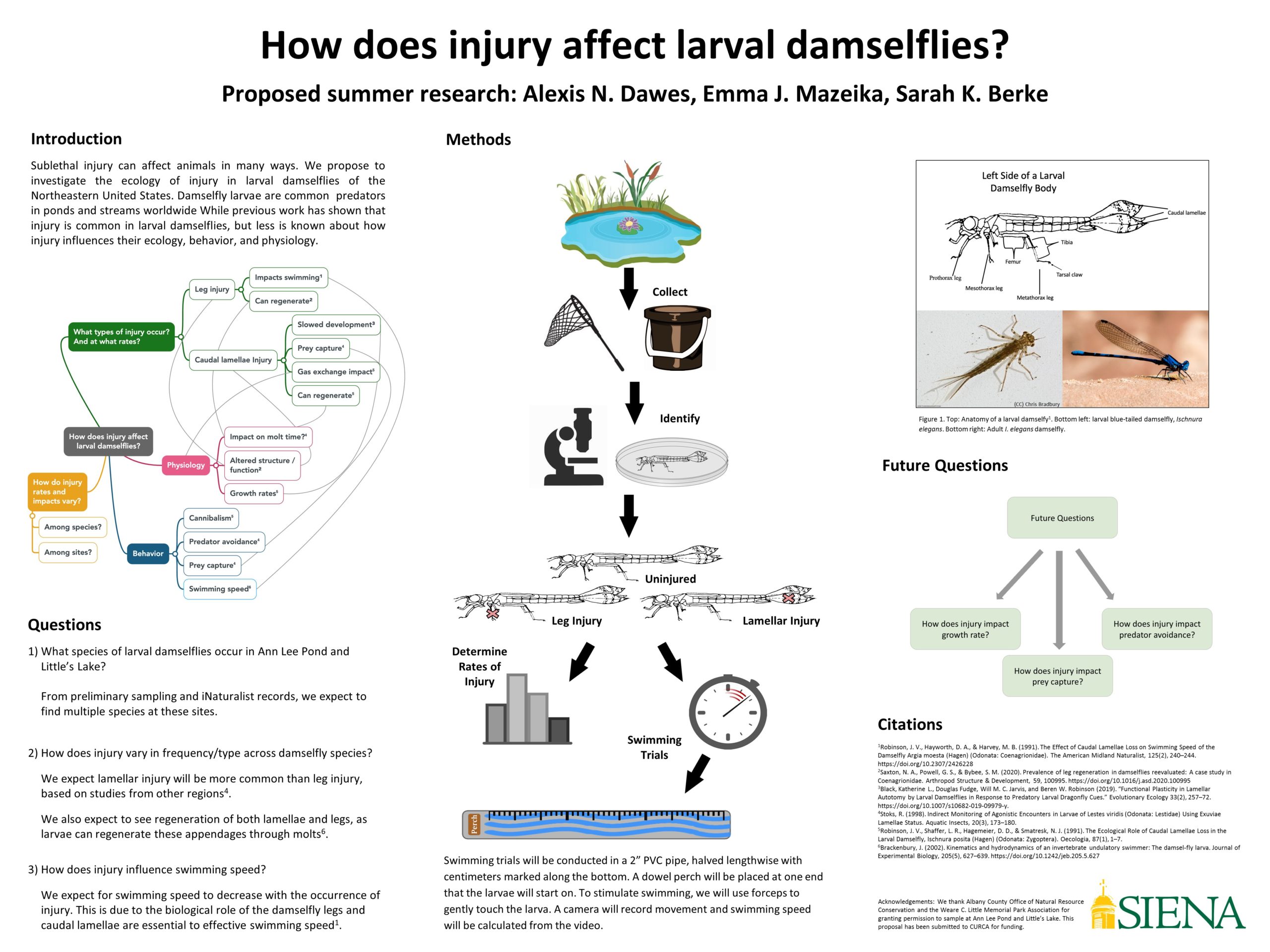
Invertebrates are critically important components of aquatic ecosystems worldwide. Many freshwater invertebrates represent the immature (larval) stages of terrestrial insects. Damselflies, for example, lay eggs in ponds and streams that hatch into flightless, fully aquatic larvae. These larvae spend weeks to months feeding and growing underwater before undergoing a terminal molt and emerging as winged adults. Larval damselflies are predators of smaller invertebrates, and are themselves prey for larger insects, fish, and amphibians. Interactions with predators, even when not lethal, can result in injury, such as the loss of a limb or other appendage. Such injuries would potentially influence an individual’s growth, ecological function, and future reproductive success. However, injury is understudied – although we know that injury occurs commonly in at least some damselfly populations and can influence growth and performance, studies are sparse and primarily concentrated in European species. Here we propose a research study that would (a) evaluate the frequency and types of injuries among the most common larval damselfly species of the northeastern United States, and (b) begin to evaluate whether injuries influence individual performance, specifically swimming speed.
Title
Ecology of injury in Damselflies: frequency and effects on performance
Faculty Advisor
Dr. Sarah Berke
Course
BIOL399
Presentation Type
Poster
Location
Table 41