

Grace Zuchowski
The Effects of Curcumin on Amyloid Fibril Formation in the Liquid Phase using Atomic Force Microscopy
Abstract:
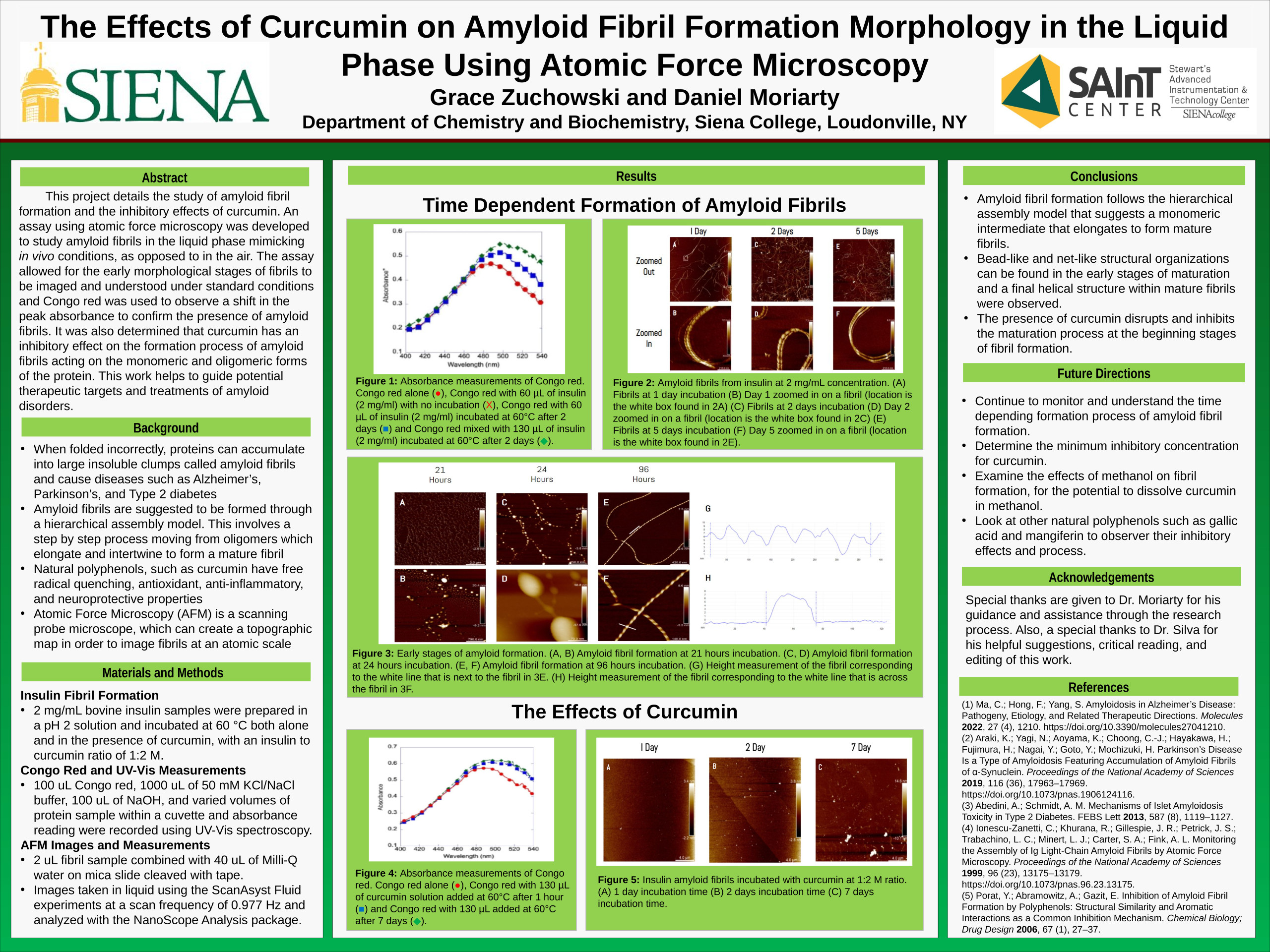
This paper details the study of amyloid fibril formation and the inhibitory effects of curcumin. Amyloid fibrils result from misfolded proteins, forming insoluble fibers resistant to degradation. The formation of amyloid fibrils is linked to many neurological and metabolic diseases. An assay using atomic force microscopy was developed to study amyloid fibrils in the liquid phase mimicking in vivo conditions, as opposed to in the air. The assay allowed for the early morphological stages of fibrils to be imaged and understood under standard in vivo conditions. Congo red was also used to observe a shift in the peak absorbance to confirm the presence of amyloid fibrils. It was also determined that curcumin has an inhibitory effect on the formation process of amyloid fibrils acting on the monomeric and oligomeric forms of the protein. This work helps to guide potential therapeutic targets and treatments of amyloid disorders.
Title
The Effects of Curcumin on Amyloid Fibril Formation in the Liquid Phase using Atomic Force Microscopy
Faculty Advisor
Dr. Daniel Moriarty
Course
Senior Reseach, CHEM426
Presentation Type
Poster
Location
Table 27